Self-sufficient
You own the code, the runbooks, the keys and the audit log. Your people run it. We are a call away, not a dependency.
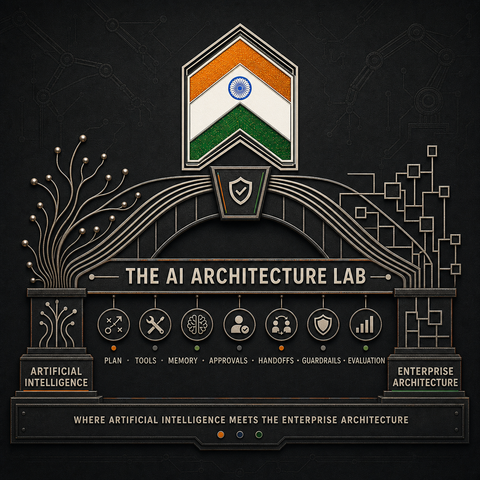
We help small and mid-sized enterprises own their AI: built inside their own systems, on data that never leaves, at a cost they can sustain.
Every business today is standing at the edge of the same gap.
custom enterprise AI tools make it into production.
MIT NANDA, The GenAI Divide: State of AI in Business, 2025.of agentic AI projects are expected to be cancelled by the end of 2027, over cost, unclear value or risk.
Gartner press release, 25 June 2025.The models are not the problem. What is missing is the architecture around them: a named owner, real controls, and a governed way into the systems the business actually runs on. That is what we build.
Agentic AI is moving faster than any budget cycle. The largest enterprises can afford to chase every release. Small and mid-sized companies cannot, and they should not have to.
So we build differently. We put the intelligence inside the systems you already run, on data that never leaves your environment, sized so the cheapest thing that works does the work. Your own team can run it without us.
Then we stay. As the market moves, we tell you what is worth adopting and what is noise, and we fold upgrades in when they pay for themselves. You keep up with the technology without losing control of the cost.
You own the code, the runbooks, the keys and the audit log. Your people run it. We are a call away, not a dependency.
Your data stays in your environment, in your cloud region or on your own servers. One logged exit, and you hold the kill switch.
Rules first, model second. The smallest model that does the job, no licence fees, and no build without a payback you can see.
A standing relationship: regular briefings on what changed, what matters to you and what to ignore, so you upgrade on evidence, not hype.
A supplier invoice fails three-way match. The routine case clears on rules alone. Then run an exception and make the call yourself.
Every step is small, priced in writing and yours to stop.
Free
Your costliest manual process, what it costs, and whether AI should touch it at all.
USD 5,000 fixed
Seven artefacts you keep: process inventory, opportunity map, cost baseline, native-first test, target architecture, roadmap and priced options.
Fixed price
Only after a go decision, and only with a payback you can see. At most two builds run at once.
Optional
A managed service, or handover to your team, with regular briefings so you never fall behind.
We build through the official APIs of the systems you already run. No platform is replaced and nothing new to learn for your team.
Models run in your cloud or on your own servers, behind one logged exit. You hold the kill switch on every run.
Rules first, the smallest model that works, and no licence fees. If a build cannot show its payback, we will tell you not to build it.
Code, tests, runbooks, keys and logs live in your repository from the first commit. No dependency on us.
A free 30-minute verdict, then a USD 5,000 Blueprint. You keep all seven artefacts even if you stop there.
A named approver signs every irreversible step. After the build, we keep you current without letting the cost creep.
"AI has to bend around the enterprise. Its systems, its controls, its workflows, its language, its people. Not the other way around."
Ajeetesh Ranjan, Founder
Six and a half years inside enterprise systems: from a 2,000-ticket support queue to redesigning the platform behind it, and owning 100+ applications end to end.
No. The Blueprint uses read-only access, and builds run in your cloud or on your servers. The only way out is one logged exit for public lookups, and you hold the kill switch. Your data never trains any model.
The 30-minute verdict is free. The Blueprint is a fixed USD 5,000 for two weeks. Each build is priced in writing before you commit, and there are no licence fees.
No. The code, tests, runbooks, keys and audit log are yours, in your repository from the first commit. Any competent engineer can continue the work.
Rules clear the routine. The model only drafts the exceptions, and a person you name approves anything that cannot be undone. Every decision is logged and can be replayed.
No. Every build ships with runbooks, and enablement for your team is priced alongside the build.